Acronits: Elevating Design with Elegant Script Typography
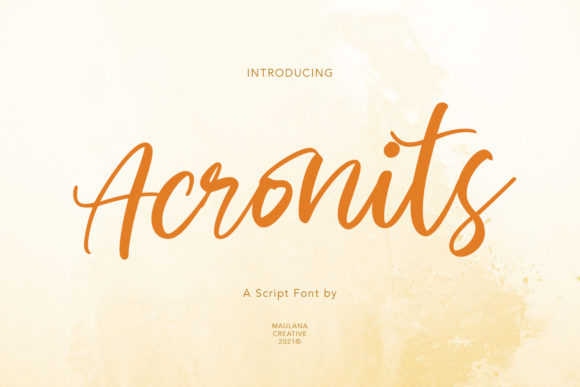
In the vast landscape of digital and print design, typography serves as the voice of visual communication. It is not merely about legibility; it is about emotion, tone, and identity. Among the myriad of typefaces available to modern creators, Acronits stands out as a distinctive choice for those seeking to infuse their projects with warmth, personality, and a touch of classic elegance. As a lovely and flowing paint-brushed script font, Acronits bridges the gap between traditional calligraphy and contemporary design needs, offering a versatile tool for professionals and hobbyists alike.
The appeal of a script font lies in its ability to mimic the human hand. Unlike rigid geometric sans-serifs or formal serifs, a brush script like Acronits carries the organic imperfections and fluid dynamics of actual paint on paper. This inherent humanity makes it an invaluable asset for designs that require a personalized style. Whether you are a graphic designer crafting a brand identity, a couple planning a wedding, or a small business owner creating marketing materials, understanding the nuances of this typeface can significantly enhance the impact of your work.
The Aesthetic Characteristics of Acronits
To effectively utilize Acronits, one must first appreciate its structural beauty. The font is characterized by its smooth, continuous strokes that emulate the pressure variations of a natural brush. These variations create a dynamic rhythm within the text, where thick downstrokes contrast elegantly with delicate upstrokes. This interplay of weight adds depth and texture, preventing the text from appearing flat or two-dimensional.
The "flowing" nature of Acronits is perhaps its most defining feature. The letters connect seamlessly, creating a sense of movement and grace. This liquidity is essential for maintaining the illusion of handwritten calligraphy. However, unlike some overly ornate scripts that sacrifice readability for flourish, Acronits maintains a balanced clarity. The letterforms are distinct enough to be read quickly, yet stylized enough to convey sophistication. This balance is crucial for practical applications where the message must be received as clearly as the aesthetic is appreciated.
Furthermore, the font possesses a certain softness that aligns well with themes of romance, gratitude, and celebration. The edges of the brush strokes are not harsh; they have a gentle finish that invites the viewer in. This makes Acronits particularly effective for contexts where the goal is to evoke feelings of comfort, intimacy, or joy. It is not a font that shouts; rather, it whispers with confidence and charm.
Primary Applications in Wedding and Event Design
One of the most prominent use cases for Acronits is in the realm of wedding stationery. Weddings are deeply personal events, and the typography chosen for invitations sets the tone for the entire celebration. Acronits is ideally suited for this purpose because it conveys a sense of timeless romance without feeling outdated.
- Wedding Invitations: Using Acronits for the names of the couple or key details like "Save the Date" creates a focal point that draws the eye. When paired with a clean, minimalist sans-serif for the logistical details, the contrast highlights the importance of the names while ensuring the address and time are easy to read.
- Thank You Cards: Post-wedding gratitude is a significant tradition. A thank you card written in a font that looks like it was penned by hand adds a layer of sincerity. Acronits allows couples to express their appreciation in a way that feels genuine and thoughtful.
- Table Numbers and Place Cards: Consistency in design is key for event aesthetics. Extending the use of Acronits to table signage and place cards ensures a cohesive visual narrative throughout the venue.
Beyond weddings, this font is equally effective for other celebratory events such as anniversaries, baby showers, and birthday parties. In each instance, the font’s ability to convey festivity and personal care makes it a preferred choice for designers aiming to create memorable keepsakes.
Branding and Commercial Use Cases
While often associated with personal events, Acronits has substantial value in commercial branding, particularly for businesses that rely on a boutique or artisanal image. Brands in the beauty, wellness, fashion, and culinary industries often seek to project an image of craftsmanship and attention to detail. A logo utilizing Acronits can instantly communicate these values.
For example, a boutique bakery might use Acronits for its logo to suggest that its products are handmade with love. Similarly, a spa or yoga studio could employ the font to evoke tranquility and flow. The key to successful commercial use is moderation. Because script fonts are visually complex, they work best when used sparingly. Using Acronits for a company name or a tagline is effective, but using it for long paragraphs of body text on a website or brochure can hinder readability and overwhelm the user.
Moreover, Acronits can be a powerful tool in packaging design. On product labels for items like artisanal soaps, candles, or gourmet foods, the font adds a premium feel. It suggests that the product inside is of high quality and carefully curated. This psychological association between the typography and the product value is a well-documented phenomenon in marketing, and leveraging a high-quality script like Acronits can provide a competitive edge in crowded marketplaces.
Pairing Acronits with Complementary Typefaces
To maximize the effectiveness of Acronits, it is essential to understand how to pair it with other fonts. Typography is rarely used in isolation; it exists in relationship with other elements on the page. The general rule of thumb when working with decorative scripts is to pair them with simple, neutral typefaces. This creates a visual hierarchy where the script serves as the accent, and the secondary font handles the heavy lifting of information delivery.
Sans-serif fonts are often the best companions for Acronits. Their clean lines and lack of ornamentation provide a stable foundation that allows the flowing script to shine without competition. Fonts like Helvetica, Montserrat, or Lato work exceptionally well. The contrast between the organic curves of Acronits and the geometric precision of a sans-serif creates a modern, sophisticated look that appeals to contemporary audiences.
Serif fonts can also be used, but with caution. A classic serif can add a layer of traditional elegance, making the combination suitable for more formal contexts. However, care must be taken to ensure that the serif font is not too decorative itself, as this can lead to visual clutter. A transitional serif with moderate contrast is usually a safe bet. The goal is always harmony; the fonts should feel like they belong together, supporting the same narrative rather than fighting for attention.
Technical Considerations for Designers
For designers integrating Acronits into their workflows, there are several technical considerations to keep in mind. First, kerning and spacing are critical. Script fonts often have specific ligatures and connecting points that need to be preserved. Automatic spacing adjustments in design software can sometimes break these connections, resulting in disjointed letters that lose their fluidity. It is advisable to manually adjust tracking and kerning to ensure that the letters flow naturally into one another.
Second, color choice plays a significant role in how the font is perceived. While black on white is standard, Acronits can look stunning in metallic tones like gold or rose gold, especially for wedding invitations and luxury branding. Soft pastels can also enhance the gentle nature of the brush strokes. However, low-contrast combinations should be avoided, as the fine details of the script may become illegible.
Finally, consider the medium. Acronits looks beautiful in print, where the texture of the paper can complement the brush stroke effect. For digital use, ensure that the font size is large enough to remain clear on various screen resolutions. Small script text can easily become pixelated or blurry on mobile devices, so it is best reserved for headlines and large display text in web design.
The Emotional Impact of Handwritten Styles
Ultimately, the power of Acronits lies in its emotional resonance. In an increasingly digital world, where much of our communication is typed and standardized, there is a growing appreciation for elements that feel human and authentic. Script fonts tap into this desire for connection. They remind us of personal letters, handwritten notes, and the care that goes into manual creation.
By choosing Acronits, designers and creators are not just selecting a font; they are choosing a mood. They are opting for warmth over coldness, personality over uniformity, and elegance over utility. This does not mean that utility is ignored—Acronits is designed to be functional—but rather that the aesthetic experience is prioritized. For audiences who value creativity and personal touch, this typographic choice signals that the creator cares about the details.
Whether used for a wedding invitation, a boutique logo, or a heartfelt greeting card, Acronits offers a unique blend of beauty and functionality. Its flowing, paint-brushed style provides a versatile canvas for expression, allowing creators to craft messages that are not only read but felt. As design trends continue to evolve, the enduring appeal of well-crafted script typography ensures that fonts like Acronits will remain essential tools for those seeking to add a personal, elegant touch to their visual communications.